
Home
About me
Self-serve add-ons for plan limits
As WellSaid introduced metered usage, users who needed more download minutes than their plan included were hard-blocked until the next billing cycle; a real churn risk for high-output customers. I designed a self-serve add-on experience that lets subscribers buy extra minutes on top of their base plan, so they can keep working without upgrading or waiting for a reset.
Company
WellSaid
Role
Product Designer (solo)
Timeline
6 weeks
Team
Product, Engineering
Status
Launched in Summer 2026
Problem
- Users who needed more download minutes than their plan included were hard-blocked until the next billing period
- Churn and support-escalation risk for high-output users with legitimate, ongoing needs
Solution
- Designed a self-serve add-on model that lets customers buy extra download minutes on top of their base plan
- Add-ons attach to the existing subscription as a recurring item, so users can keep working without upgrading or waiting for a reset
Results
- Gave users a clear path past their limit without a plan change
- Chose add-ons over hard stops, credit packs, post-pay overages, and plan upgrades as the best fit for our billing architecture

Background
Why now?
A natural extension of a new usage model
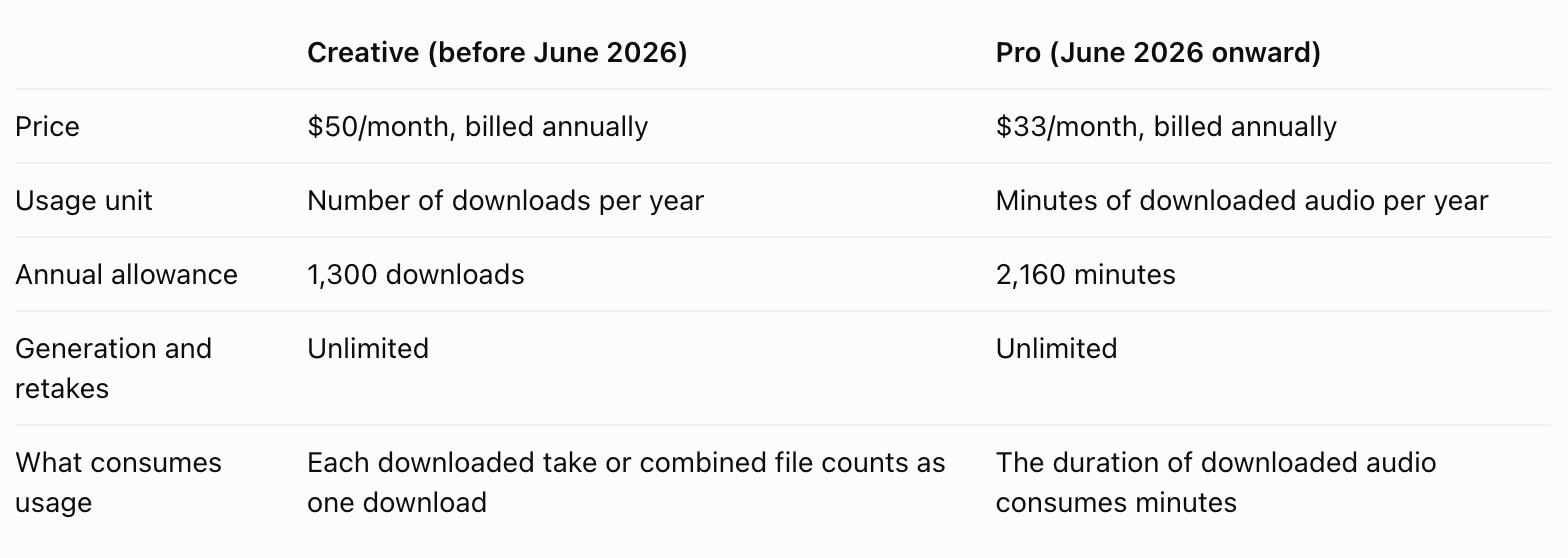
WellSaid had recently moved from a tiered downloads-based Studio model toward a finished-audio-minutes model in order to match customers’ mental model when purchasing a plan.
Research found customers think in minutes
Under the old model, a download was a relatively blunt unit. A 10-second clip and a 5-minute recording each consumed one download, even though they represented very different amounts of finished audio.
Minutes create a more meaningful unit to sell
Imagine a customer who has used up their downloads and only needs another 20 minutes of voiceover for a project. Buying a block of additional minutes is a relatively clear proposition: they know what they're purchasing and can estimate how much work it will cover.
Add-ons give customers a middle ground between plans
Subscription allowance
Predictable baseline capacity

Add-on minutes
Flexible option when demand exceeds the baseline
Upgrade when needs grow
A higher subscription tier for sustained usage

Process
When & where to offer an add-on
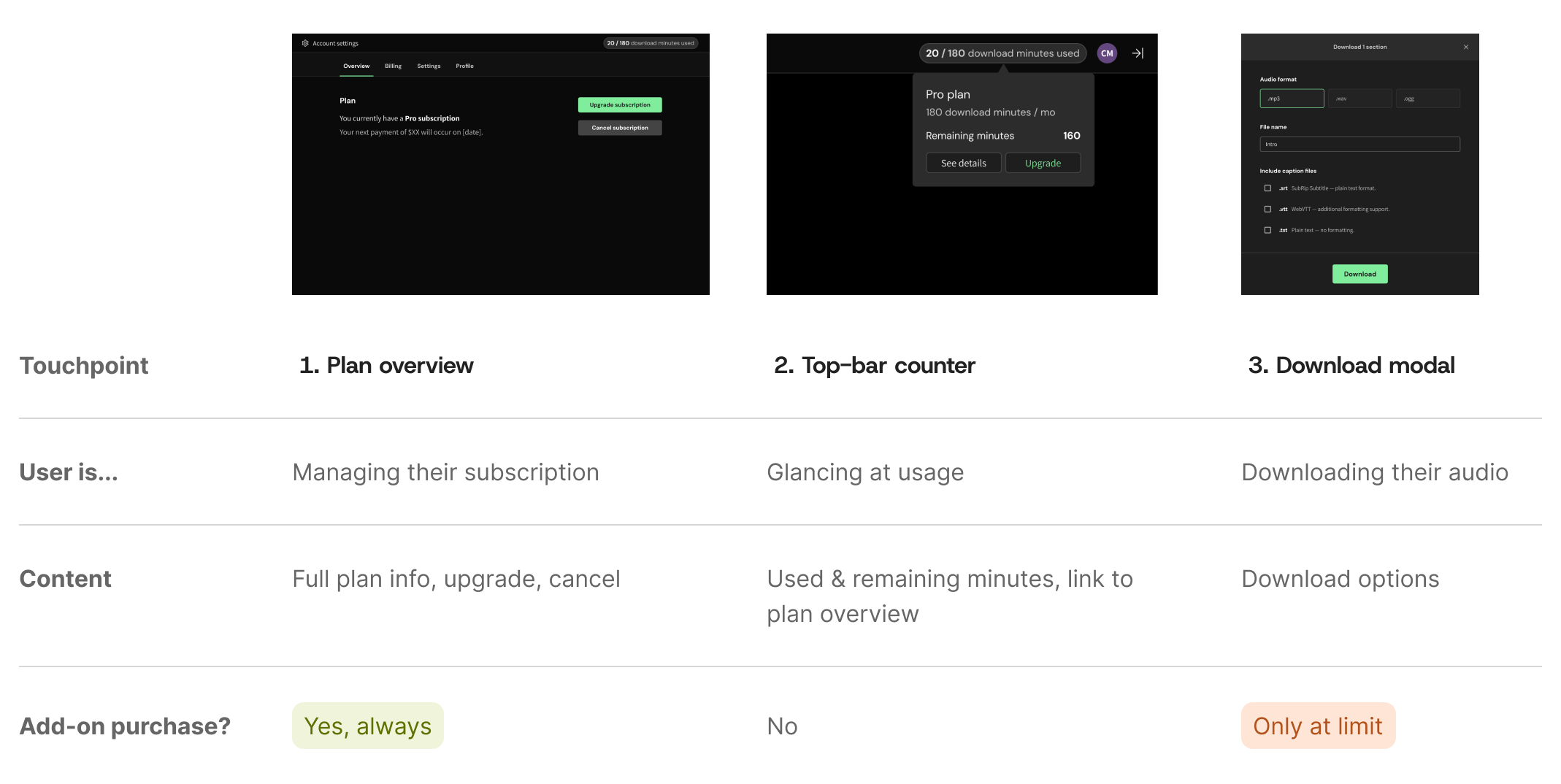
3 existing touch points to consider.

Design
1. Plan overview
The primary place where add-on purchase lives.
A natural entry point
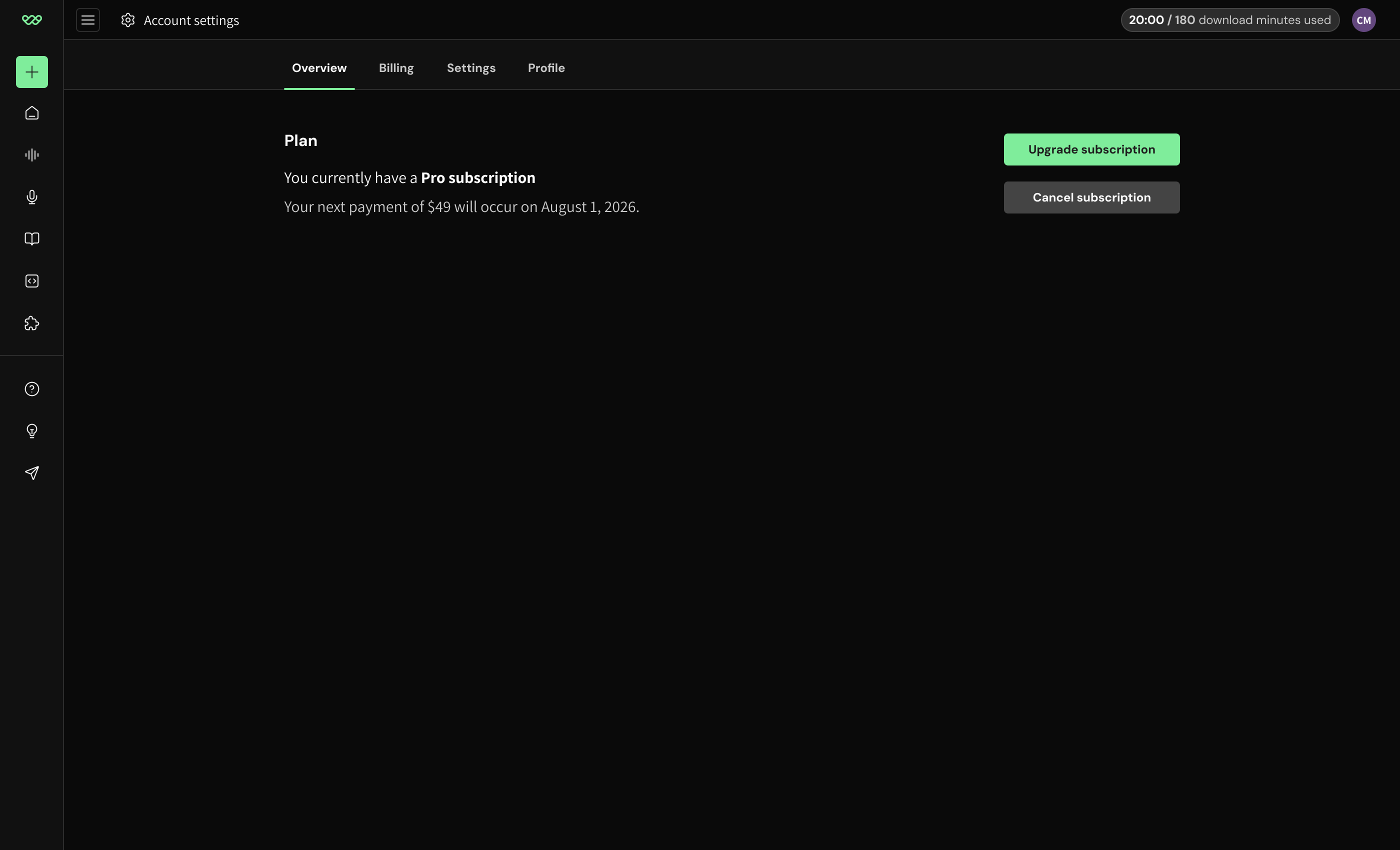
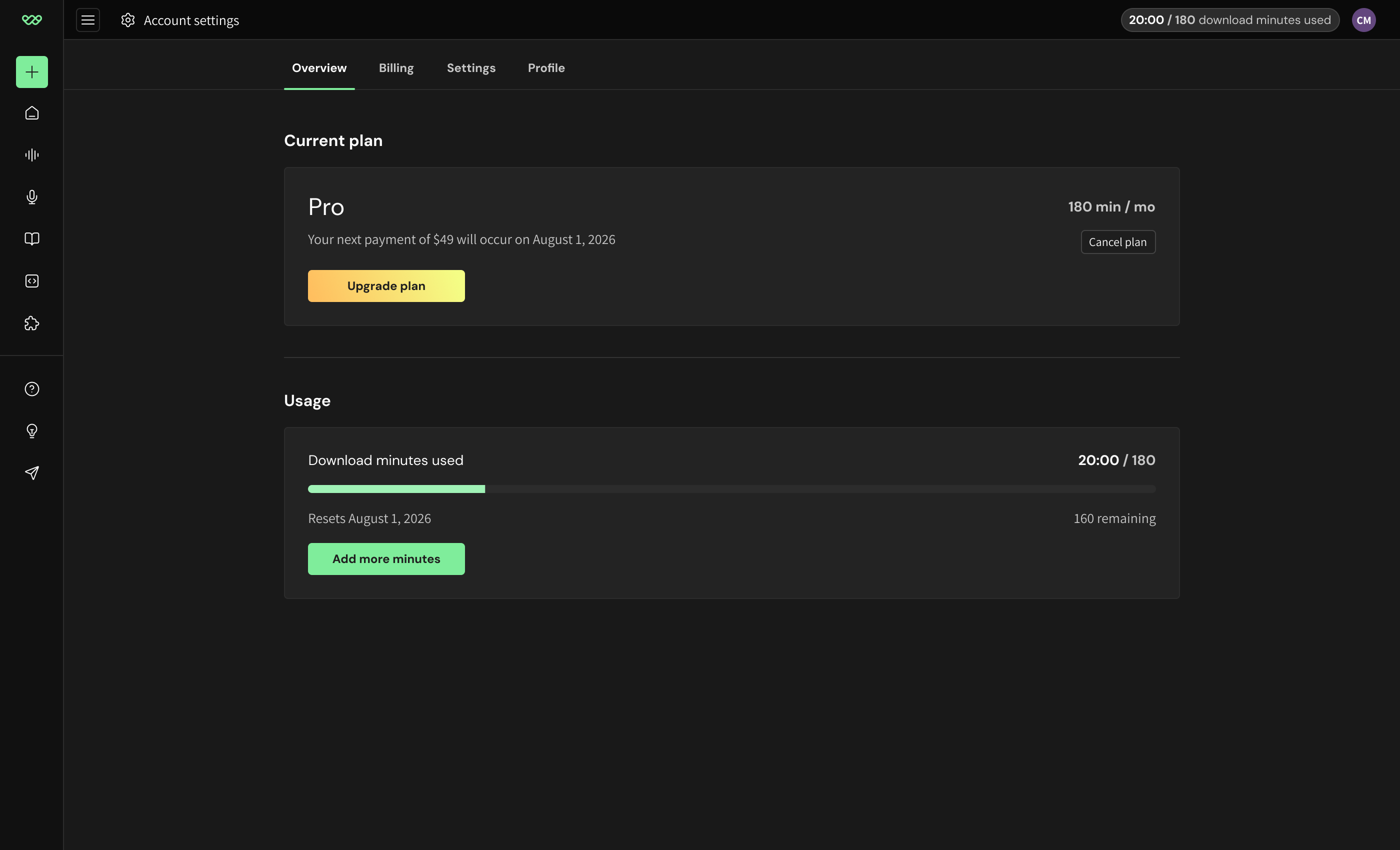
Users already come here to view & manage their plan, adding detailed usage & an add-on purchase CTA was a natural extension.
An opportunity to bring more intention to the page
The existing page offered little beyond basic plan details. I used the addition of add-on purchases as an opportunity to improve page hierarchy and create a more cohesive plan management experience.
Before
After
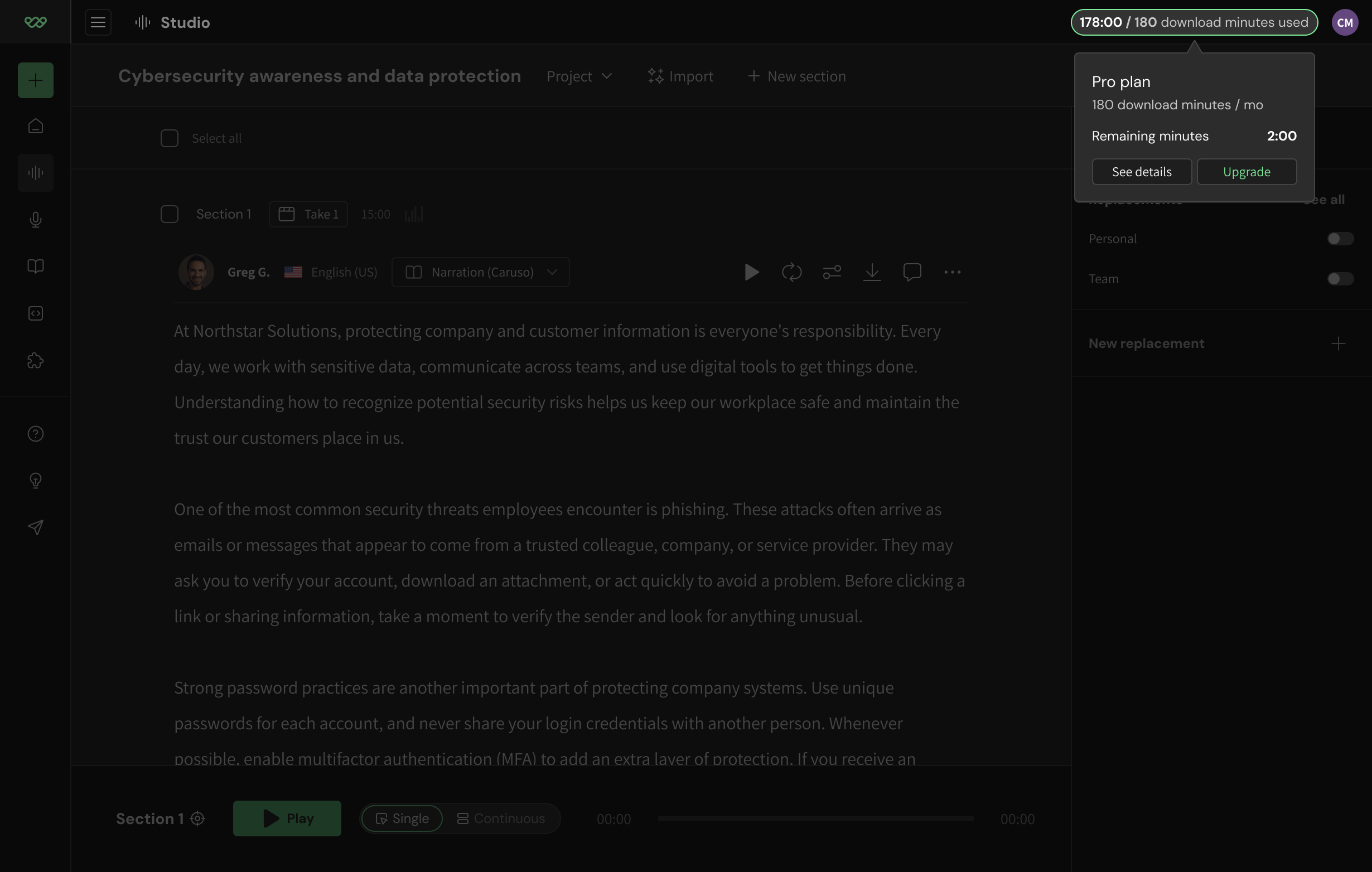
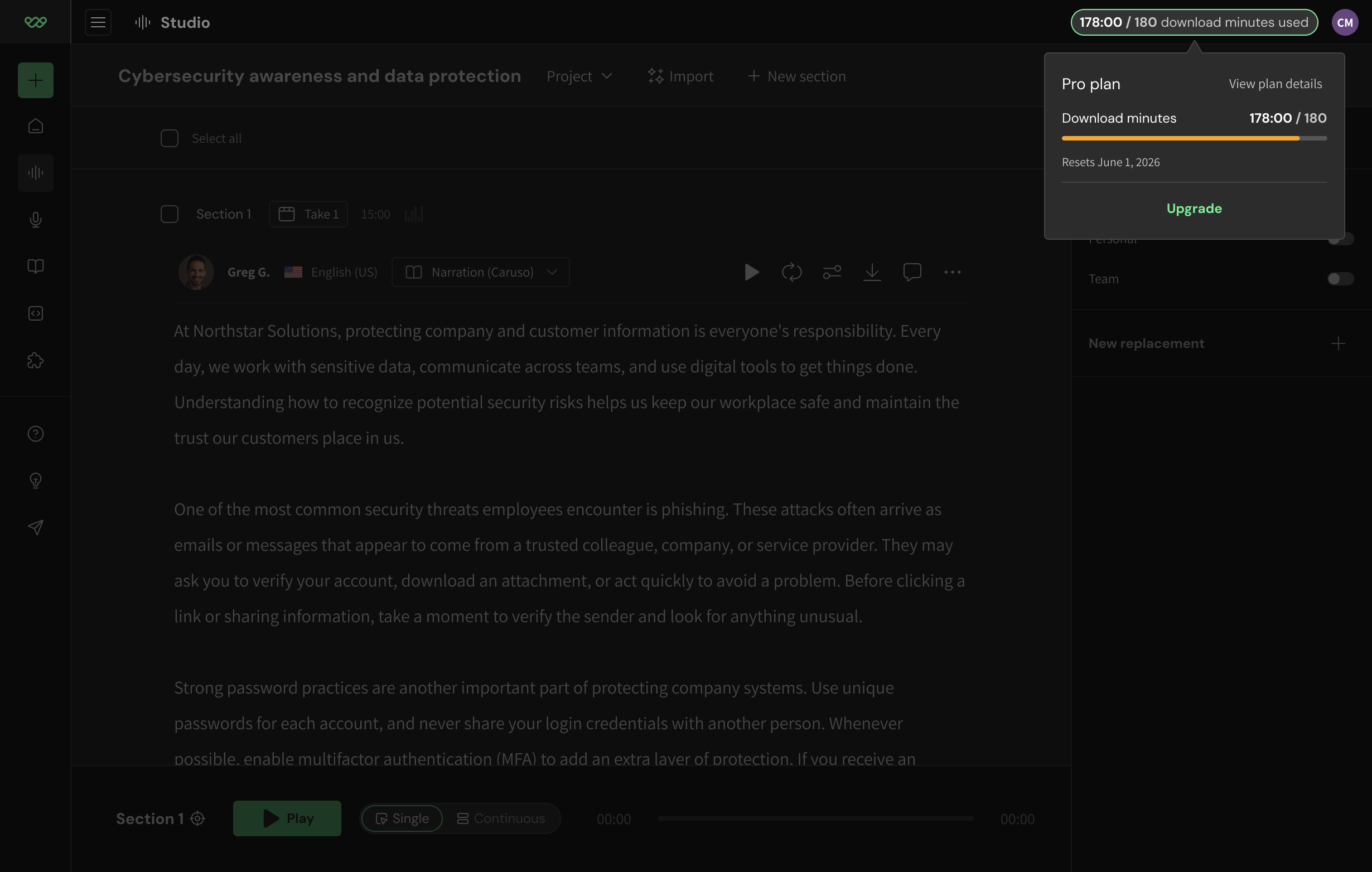
2. Top-bar counter
Meant for glancing, not buying.
Intentionally lightweight
The counter is always visible, even when someone has used just 20 of their 180 minutes. Keeping it informational rather than promotional avoids unnecessary upsell prompts for users who aren't approaching their limit.
Updates for parity
The initial popover release was a quick, last-minute addition. I used this opportunity to establish a clearer visual hierarchy and align the usage indicator with the design of the Plan Overview page.
Before
After
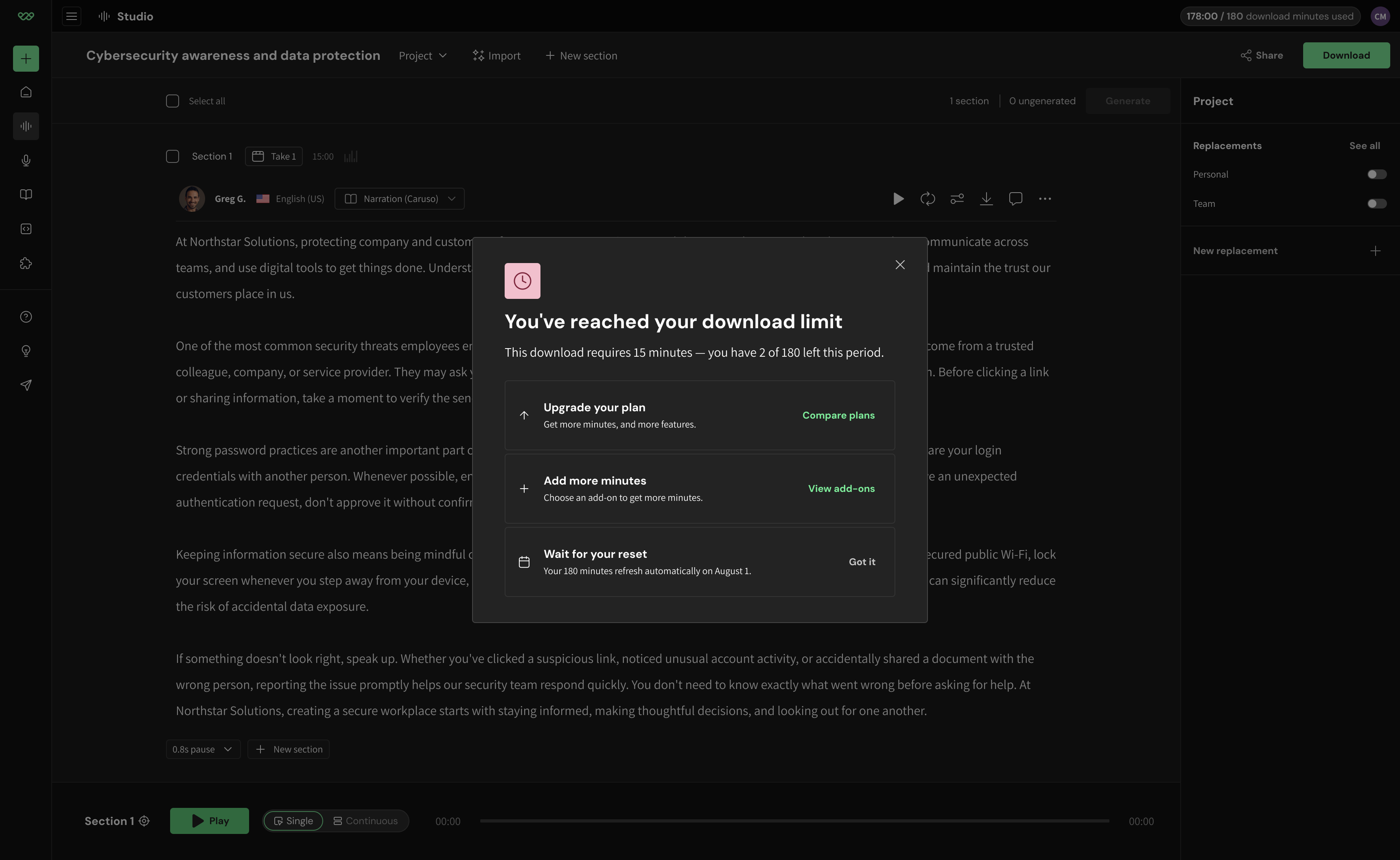
3. Download modal
Uninterrupted, unless user is blocked.
A core task, left uninterrupted
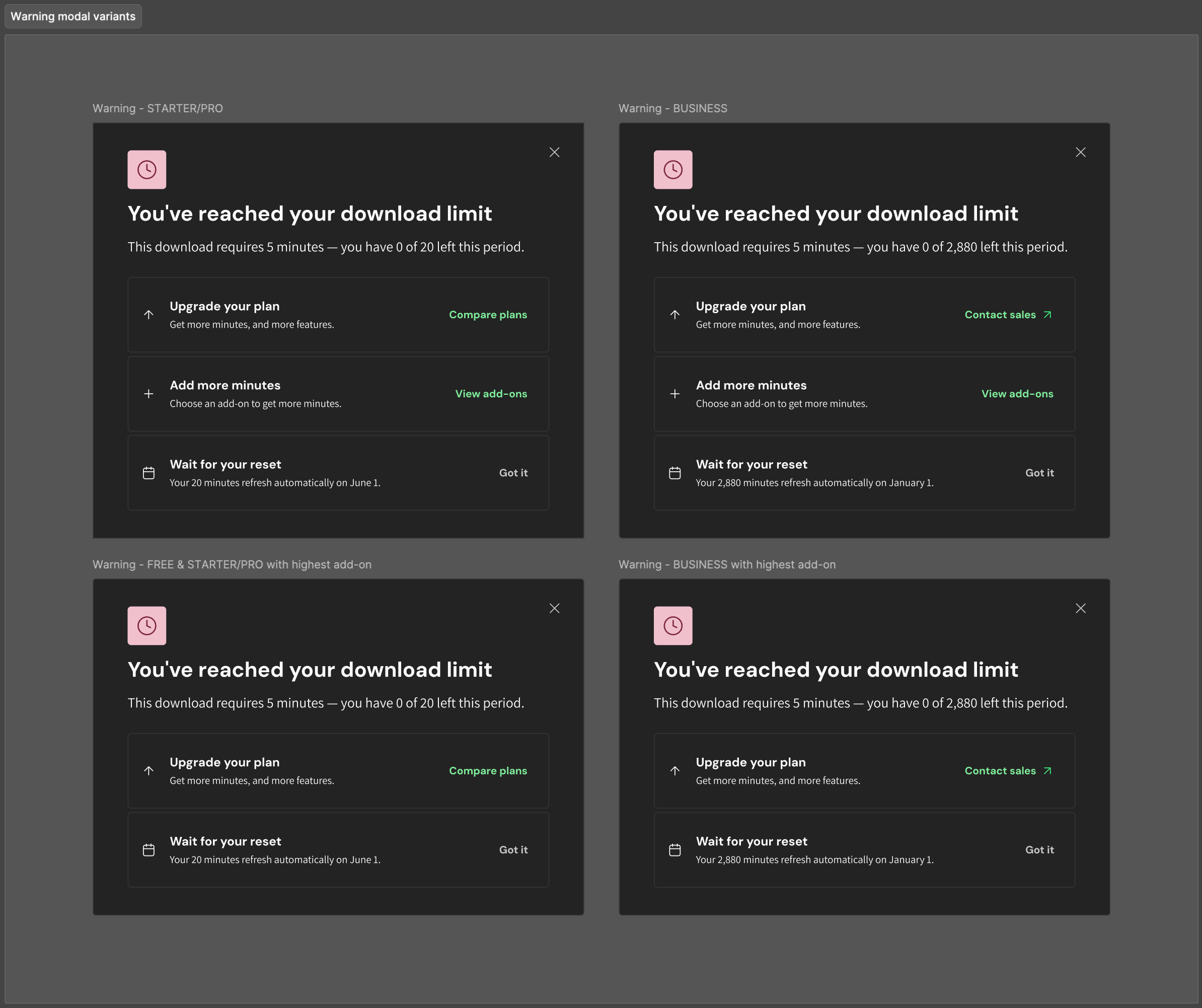
We knew the download duration at the moment a user clicked Download, so we could use that to determine whether an intervention was needed. To preserve the download experience, we chose to leave the existing flow untouched and introduce an upsell only when a user reached their usage limit.
An informative moment, not an aggressive upsell
When a user reached their limit, the modal explained the duration of their intended download vs. their remaining minutes for the period. From there, they could upgrade their plan, purchase an add-on, or wait for their minutes to reset—with a clear way to dismiss the modal and decide later.

Delivered assets (2026)
Prototype showing purchase modal behavior
Various combinations of usage, plan, and add-on states
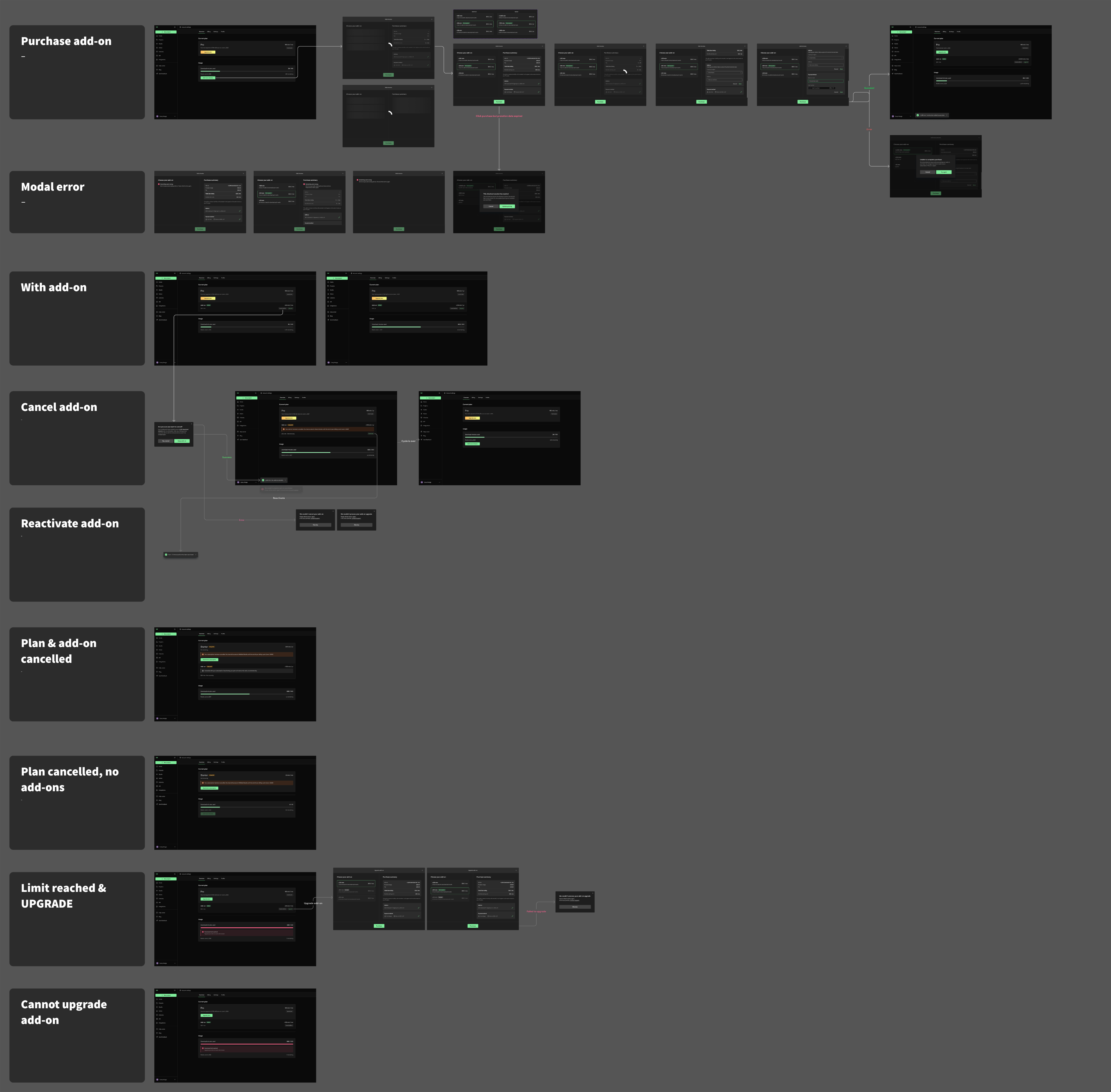
Warning modal variations depending on subscription tier
Back to Home
LLM powered Smart Suggestions
Add-ons for plan limits
Resume
Marina Semez
Home
About me
Self-serve add-ons for plan limits
As WellSaid introduced metered usage, users who needed more download minutes than their plan included were hard-blocked until the next billing cycle; a real churn risk for high-output customers. I designed a self-serve add-on experience that lets subscribers buy extra minutes on top of their base plan, so they can keep working without upgrading or waiting for a reset.
Company
WellSaid
Role
Product Designer (solo)
Timeline
6 weeks
Team
Product, Engineering
Status
Launched in Summer 2026
Problem
- Users who needed more download minutes than their plan included were hard-blocked until the next billing period
- Churn and support-escalation risk for high-output users with legitimate, ongoing needs
Solution
- Designed a self-serve add-on model that lets customers buy extra download minutes on top of their base plan
- Add-ons attach to the existing subscription as a recurring item, so users can keep working without upgrading or waiting for a reset
Results
- Gave users a clear path past their limit without a plan change
- Chose add-ons over hard stops, credit packs, post-pay overages, and plan upgrades as the best fit for our billing architecture

Background
Why now?
A natural extension of a new usage model
WellSaid had recently moved from a tiered downloads-based Studio model toward a finished-audio-minutes model in order to match customers’ mental model when purchasing a plan.
Research found customers think in minutes
Under the old model, a download was a relatively blunt unit. A 10-second clip and a 5-minute recording each consumed one download, even though they represented very different amounts of finished audio.
Minutes create a more meaningful unit to sell
Imagine a customer who has used up their downloads and only needs another 20 minutes of voiceover for a project. Buying a block of additional minutes is a relatively clear proposition: they know what they're purchasing and can estimate how much work it will cover.
Add-ons give customers a middle ground between plans
Subscription allowance
Predictable baseline capacity
Add-on minutes
Flexible option when demand exceeds the baseline
Upgrade when needs grow
A higher subscription tier for sustained usage

Process
When & where to offer an add-on
3 existing touch points to consider.

Design
1. Plan overview
The primary place where add-on purchase lives.
A natural entry point
Users already come here to view & manage their plan, adding detailed usage & an add-on purchase CTA was a natural extension.
An opportunity to bring more intention to the page
The existing page offered little beyond basic plan details. I used the addition of add-on purchases as an opportunity to improve page hierarchy and create a more cohesive plan management experience.
Before
After
2. Top-bar counter
Meant for glancing, not buying.
Intentionally lightweight
The counter is always visible, even when someone has used just 20 of their 180 minutes. Keeping it informational rather than promotional avoids unnecessary upsell prompts for users who aren't approaching their limit.
Updates for parity
The initial popover release was a quick, last-minute addition. I used this opportunity to establish a clearer visual hierarchy and align the usage indicator with the design of the Plan Overview page.
Before
After
3. Download modal
Uninterrupted, unless user is blocked.
A core task, left uninterrupted
We knew the download duration at the moment a user clicked Download, so we could use that to determine whether an intervention was needed. To preserve the download experience, we chose to leave the existing flow untouched and introduce an upsell only when a user reached their usage limit.
An informative moment, not an aggressive upsell
When a user reached their limit, the modal explained the duration of their intended download vs. their remaining minutes for the period. From there, they could upgrade their plan, purchase an add-on, or wait for their minutes to reset—with a clear way to dismiss the modal and decide later.

Delivered assets (2026)
Prototype showing purchase modal behavior
Various combinations of usage, plan, and add-on states
Warning modal variations depending on subscription tier
Back to Home
LLM powered Smart Suggestions
Add-ons for plan limits
Resume
Marina Semez
Home
About me
Self-serve add-ons for plan limits
As WellSaid introduced metered usage, users who needed more download minutes than their plan included were hard-blocked until the next billing cycle; a real churn risk for high-output customers. I designed a self-serve add-on experience that lets subscribers buy extra minutes on top of their base plan, so they can keep working without upgrading or waiting for a reset.
Company
WellSaid
Role
Product Designer (solo)
Timeline
6 weeks
Team
Product, Engineering
Status
Launched in Summer 2026
Problem
- Users who needed more download minutes than their plan included were hard-blocked until the next billing period
- Churn and support-escalation risk for high-output users with legitimate, ongoing needs
Solution
- Designed a self-serve add-on model that lets customers buy extra download minutes on top of their base plan
- Add-ons attach to the existing subscription as a recurring item, so users can keep working without upgrading or waiting for a reset
Results
- Gave users a clear path past their limit without a plan change
- Chose add-ons over hard stops, credit packs, post-pay overages, and plan upgrades as the best fit for our billing architecture

Background
Why now?
A natural extension of a new usage model
WellSaid had recently moved from a tiered downloads-based Studio model toward a finished-audio-minutes model in order to match customers’ mental model when purchasing a plan.
Research found customers think in minutes
Under the old model, a download was a relatively blunt unit. A 10-second clip and a 5-minute recording each consumed one download, even though they represented very different amounts of finished audio.
Minutes create a more meaningful unit to sell
Imagine a customer who has used up their downloads and only needs another 20 minutes of voiceover for a project. Buying a block of additional minutes is a relatively clear proposition: they know what they're purchasing and can estimate how much work it will cover.
Add-ons give customers a middle ground between plans
Subscription allowance
Predictable baseline capacity

Add-on minutes
Flexible option when demand exceeds the baseline
Upgrade when needs grow
A higher subscription tier for sustained usage

Process
When & where to offer an add-on
3 existing touch points to consider.

Design
1. Plan overview
The primary place where add-on purchase lives.
A natural entry point
Users already come here to view & manage their plan, adding detailed usage & an add-on purchase CTA was a natural extension.
An opportunity to bring more intention to the page
The existing page offered little beyond basic plan details. I used the addition of add-on purchases as an opportunity to improve page hierarchy and create a more cohesive plan management experience.
Before
After
2. Top-bar counter
Meant for glancing, not buying.
Intentionally lightweight
The counter is always visible, even when someone has used just 20 of their 180 minutes. Keeping it informational rather than promotional avoids unnecessary upsell prompts for users who aren't approaching their limit.
Updates for parity
The initial popover release was a quick, last-minute addition. I used this opportunity to establish a clearer visual hierarchy and align the usage indicator with the design of the Plan Overview page.
Before
After
3. Download modal
Uninterrupted, unless user is blocked.
A core task, left uninterrupted
We knew the download duration at the moment a user clicked Download, so we could use that to determine whether an intervention was needed. To preserve the download experience, we chose to leave the existing flow untouched and introduce an upsell only when a user reached their usage limit.
An informative moment, not an aggressive upsell
When a user reached their limit, the modal explained the duration of their intended download vs. their remaining minutes for the period. From there, they could upgrade their plan, purchase an add-on, or wait for their minutes to reset—with a clear way to dismiss the modal and decide later.

Delivered assets (2026)
Prototype showing purchase modal behavior
Various combinations of usage, plan, and add-on states
Warning modal variations depending on subscription tier
Back to Home
LLM powered Smart Suggestions
Add-ons for plan limits
Resume